Every portrait client faces the same fork in the road: buy finished prints and wall art, or buy the digital files and handle it yourself. The files feel modern and safe. They are also, in the honest accounting of most households, where portraits go to be forgotten. Industry photographers have watched the pattern for years: the family that leaves with files intends to print them, prints a handful of small ones, and the rest live in a folder, then in a replaced phone, then in a story that starts with the words we used to have those pictures somewhere.
None of that means files are worthless. It means the two products do different jobs, and choosing well starts with knowing which job you actually need done.
What finished pieces do that files cannot
A finished print from a studio is color-calibrated, printed on materials chosen to last, and sized deliberately for a specific wall. Consumer printing is a lottery by comparison: drugstore and online labs shift colors toward green or magenta, crop images to fit standard sizes whether the composition survives it or not, and print on papers that fade measurably in sunny rooms. Studios that work as full-service operations, like Ann's Photography, also handle the unglamorous steps families skip: retouching finished properly, checking the print when it arrives, and even installing wall pieces so the nail holes land right the first time.
There is a behavioral difference too. A portrait on the wall gets seen thousands of times, by the children in it most of all, and child psychologists have long noted that kids read family portraits as evidence of belonging. A file gets seen when someone searches for it. Both have value, but they are not the same value, and they are not priced as if they were.
| Where it hangs | Typical print size | Rule of thumb |
|---|---|---|
| Above a sofa | 30-40 inches wide | Aim for about two-thirds the width of the sofa |
| Above a fireplace mantel | 24-36 inches wide | Slightly narrower than the mantel, centered on it |
| Stairway or hallway gallery | 11x14 to 16x20 each, grouped | Several mid-size pieces beat one large one here |
| Bedroom or nursery | 16x20 to 24x30 | Scaled to the wall, not the furniture |
| Desk and gifts for family | 5x7 and 8x10 | Small prints are for hands and desks, not walls |
Sizing: the mistake nearly everyone makes
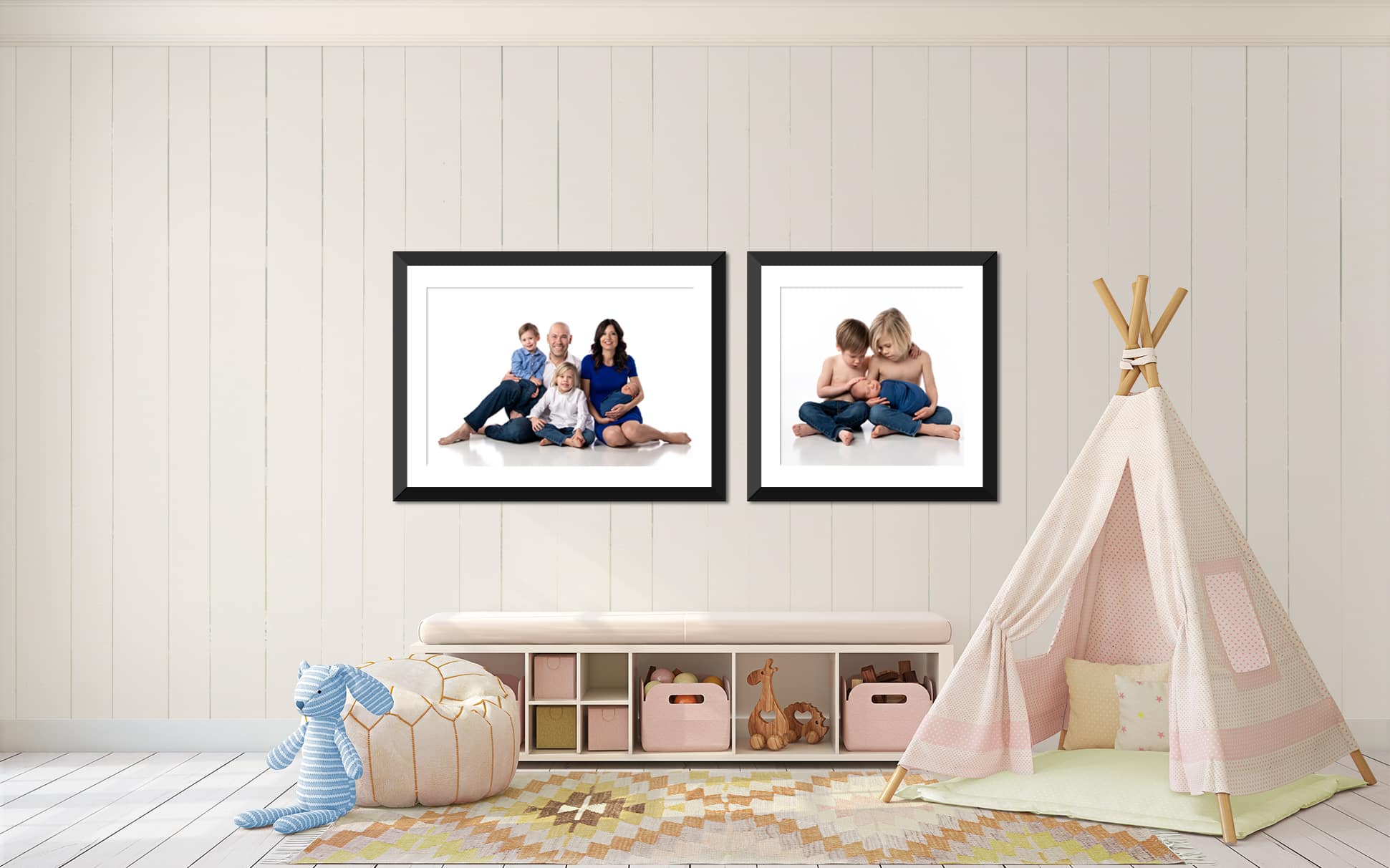
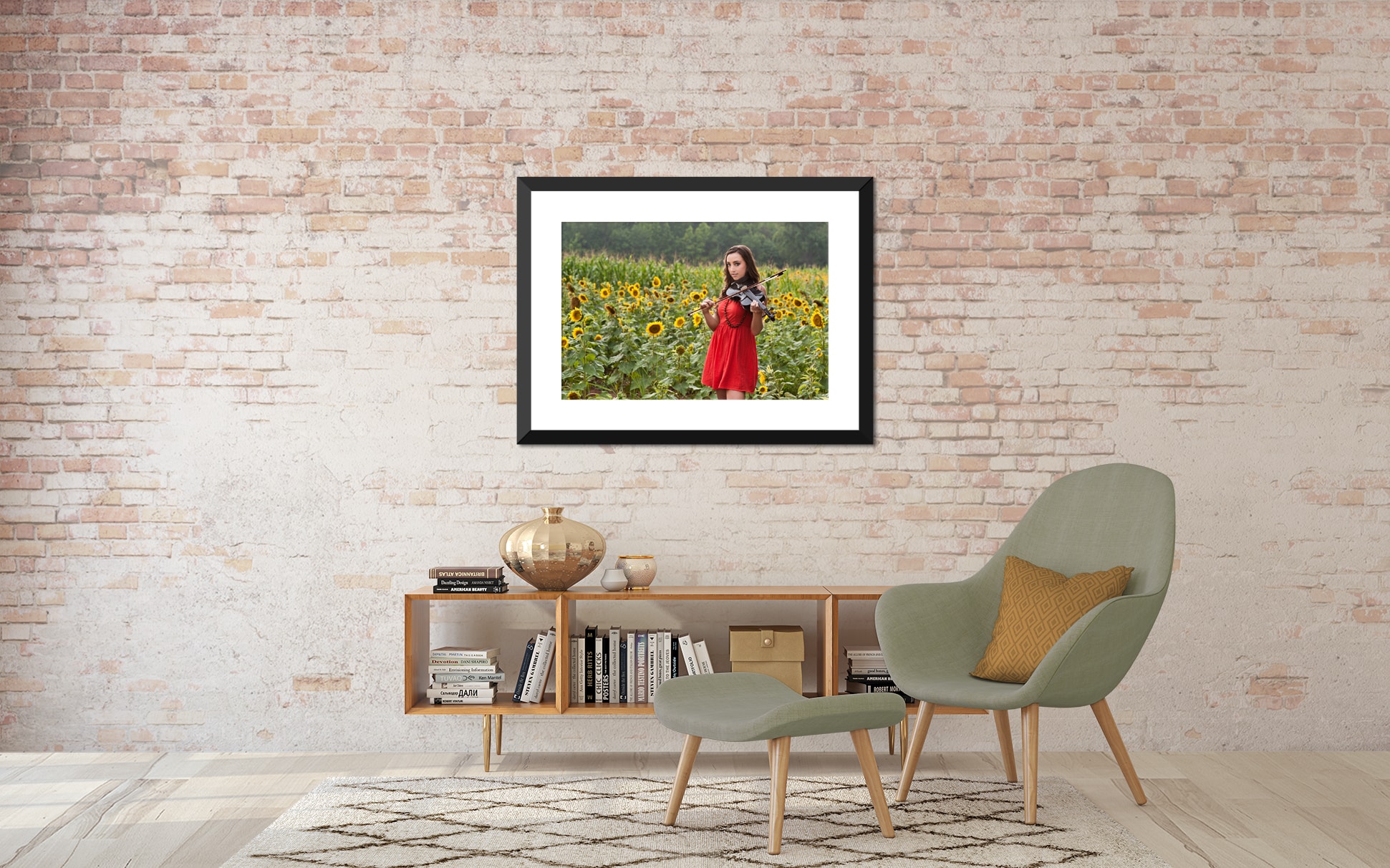
The most common wall art error is buying too small. An 8x10 above a sofa looks like a postage stamp on an envelope, because walls are big and viewing distances are long. The working rule for above furniture is that the piece, or a grouping treated as one piece, should span roughly two-thirds of the furniture's width. A six-foot sofa wants about four feet of artwork. That number startles people until they tape paper templates to the wall and see it, which is exactly what you should do before ordering: painter's tape outlines at candidate sizes, left up for a day, viewed from where people actually sit.
Grouping smaller pieces is the budget-friendly route to the same coverage, and it suits hallways and stairways where viewers stand close. Four 11x14s in a grid can carry a wall that one 16x20 cannot. The trade-off is composition effort, since a gallery needs images chosen to work as a set, which is a good conversation to have at the ordering appointment rather than alone with a folder of two hundred files.
A sensible hybrid for most families
The practical answer for many households is both, in the right order. Choose the one or two hero images and have them finished properly at wall size, because those are the portraits your family will actually live with. Add an album for the session's full story, since albums get opened at holidays in a way folders do not. Then take files for the practical jobs: holiday cards, gifts for relatives, social sharing, and a backup copy stored in two places. Ordered this way, the files become the distribution system and the finished pieces become the point, instead of the files being the point and printing being a chore that loses to every busy weekend.
Whichever way you go, decide before the session if you can. A photographer shooting for a forty-inch wall piece composes with more space around the subjects and checks sharpness at print magnification. A photographer shooting for a phone screen composes tighter. The end product you want quietly shapes how the session should be run from the first frame.
Common questions
Why do studio prints cost more than printing the files myself?
Because the price covers calibration, professional lab materials rated to last for decades, retouching finished to print standard, inspection of the physical piece, and often delivery and installation. A consumer lab print covers the paper, and the color gamble comes free.
What size print should go above our sofa?
Start with the two-thirds rule: artwork spanning about two-thirds the width of the sofa, which usually means a single piece 30 to 40 inches wide or a grouped set covering the same span. Tape paper templates up first and live with them for a day.
Should we skip digital files entirely?
Not necessarily. Files are the right tool for cards, gifts, sharing, and backup. The mistake is buying only files with a plan to print later that never happens. Decide which images deserve to be finished pieces and order those as prints or wall art from the start.
← All guides from Ann's Photography← Back to Ann's Photography